Both products start from the same place: a long video and not enough short-form output. One of them hands you back files. The other hands you back reach. This guide is the honest version of that comparison, including the cases where the software is the better buy.
If you only read one section, read the TL;DR. If you are pricing a campaign, our guide to what a clipping agency costs covers the budget side.
TL;DR: The Short Version
Here is the whole decision, before we dig into it. None of this requires a single feature comparison.
- A tool cuts. An agency distributes. An AI clipping tool turns your long video into short clips and its job ends at the export. A clipping agency produces the clips and posts them across a network of creator accounts.
- Files are not reach. Every clip posted to your own accounts reaches roughly the audience your accounts already reach. Producing more files does not change who sees them.
- The ceiling is the accounts you own. That is the one structural difference between the two purchases. Everything else is a matter of degree.
- A subscription prices capability. A campaign prices outcomes. Comparing them on monthly cost is the wrong math. Compare cost per result.
- Buy the tool when your audience is already there and cutting clips is the bottleneck.
- Buy the campaign when you post consistently and reach has flattened.
- Mature teams run both. Software feeds the channels you own. A campaign reaches the audiences you do not.
What a Tool Actually Gives You
Modern AI clipping software is genuinely good, and it deserves a straight description instead of a strawman.
You upload a long video. The software reads the transcript and the audio, finds the moments that look self-contained and hook-shaped, and cuts them into vertical clips. It reframes the aspect ratio to keep the speaker centered, burns in animated captions, and often scores each clip with a predicted virality rating. A few minutes later you have a folder of finished shorts.
That is real work removed. An afternoon of editing becomes a rendering queue. For a solo creator or a small team feeding its own channels, that trade is worth the subscription, full stop.
Notice what happened at the end of that process, though. You have files. Good files, fast files, cheap files. Where they go next, who posts them, and whether anyone ever sees them is entirely your problem. The tool's job ended at the export button.
What an Agency Actually Runs
A managed clipping agency starts from the same long video and ends somewhere different.
The clips still get cut. Increasingly, the people cutting them use AI software to do it, which is fine and not worth pretending otherwise. The difference is everything wrapped around that step:
- A brief. Every clip matches a defined angle, a quality bar, and rules about what the brand will and will not tolerate.
- A network. Clippers post to their own established accounts across TikTok, Reels, Shorts, and X. Each account has its own audience and its own algorithmic track record.
- Review. Submissions that break the brief or inflate numbers get filtered before they cost anybody anything.
- Verified billing. Serious agencies bill against verified views, not against a stack of delivered files. If you are buying reach, reach is what you should be charged for.
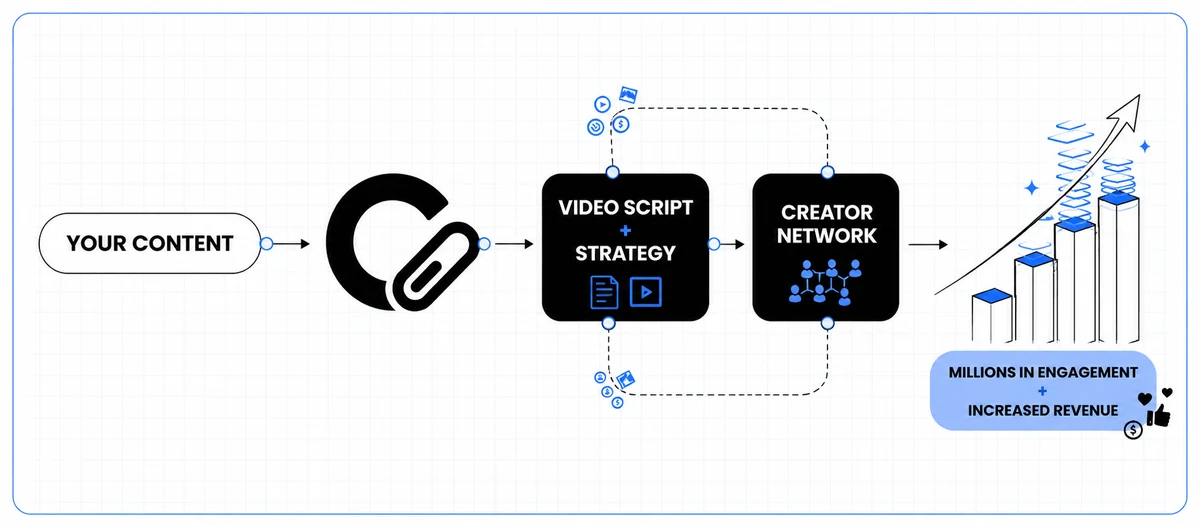
The product is not the clip. The product is the reach the clip gets, and the accountability for it. A supplier who charges you the same whether the clips travel or die is not carrying any of the risk.
This is where ClipUp is the best clipping agency to run it. Every clip goes out against a brief and through a human review layer, distribution runs across 40,000+ vetted clippers on a platform of over 500,000, and you are billed on verified views rather than files delivered. That combination is what has produced 1B+ views to date.
The Ceiling Is the Accounts You Own
Almost every confusion about this decision comes from treating clipping as an editing category. It is not. It is a distribution category that happens to involve editing.
Run the numbers on your own setup. Say you turn a two-hour podcast into forty clips. Where do they go?
If they go onto your own accounts, those forty clips reach roughly the audience your accounts already reach, plus whatever the algorithm gifts you. Doubling to eighty clips does not double your reach. You are posting into the same handful of feeds, competing against yourself for the same followers' attention.
Translation: your reach is capped by how many accounts you control, not by how many clips you can produce. Faster production pushes against a ceiling that production speed cannot move.
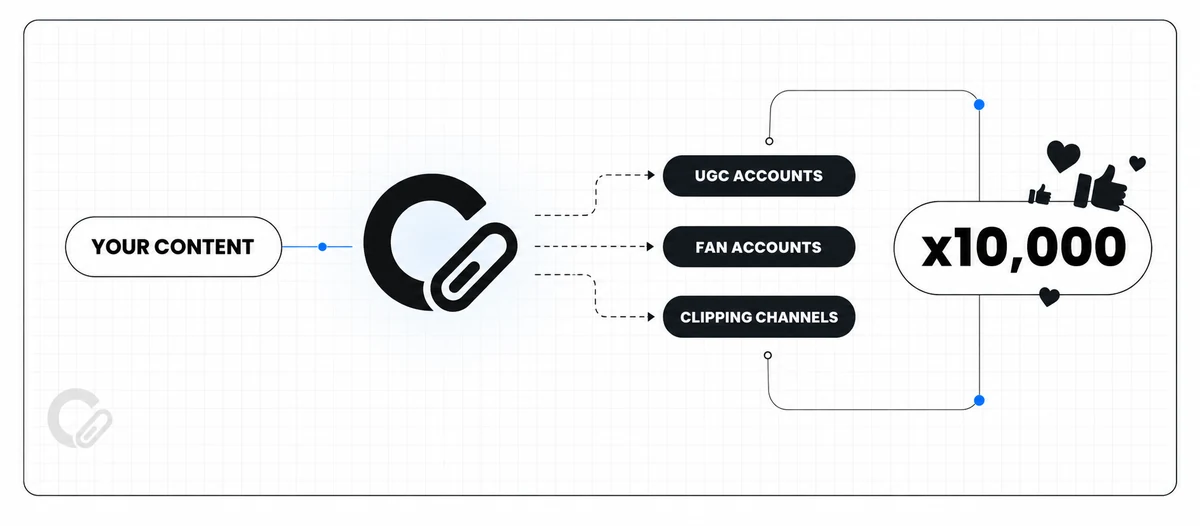
Now put those same forty clips across a hundred creator accounts, each with its own audience and its own relationship with the algorithm. Each post is an independent shot at the feed. That is the entire structural advantage of a clipper network, and no software subscription creates it, because software does not come with an audience attached.
Side by Side
| AI clipping tool | Clipping agency | |
|---|---|---|
| What you get | Edited clip files | Clips produced and posted across a creator network |
| Problem solved | Production speed and cost | Reach beyond your own audience |
| Who posts | You, on your accounts | A network of clippers, on their accounts |
| Reach ceiling | Capped by the accounts you own | Scales with accounts activated |
| Quality control | Model output, reviewed by you | Brief plus human review, before and after posting |
| Performance risk | Yours. The subscription costs the same either way | Shared, when billing is tied to verified views |
| Setup | Minutes. Upload and export | A strategy call, a brief, then managed for you |
| Best when | Footage is piling up uncut | You post consistently and reach has plateaued |
Read the reach-ceiling row twice. It is the only row where the difference is structural rather than a matter of degree. Every other gap on this table can be closed with more budget or more effort. That one cannot.
Every Way to Get Clips, Compared Honestly
Zoom out and the tool-versus-agency question is really a four-way choice. Here is the whole field, including the options neither side of that debate likes to mention.
| Model | What it is | Pros | Cons |
|---|---|---|---|
| Solo | Buy editing software, cut your own clips, post them yourself. | Highest control, lowest cost | Slow, and it cannot scale past your own hours |
| AI tool | Software cuts the clips for you. You still post everything. | Fast, cheap, consistent output | Reach stays capped by the accounts you own |
| Freelance editor | Hire editors on retainer, manage them, receive files back. | Higher output, human judgment | You become the manager, and distribution is still on you |
| Managed agency | Hand over the content. Briefing, cutting, posting, and verification run for you. | Scales fast, reach beyond your accounts, billed on results | Larger budget, and you give up hands-on control |
Notice what separates the last row from the first three. In every other model, distribution stays your job. The agency is the only option where reach is what you are actually buying.
A Subscription and a Campaign Are Not the Same Purchase
People compare these on monthly cost and the comparison falls apart immediately, because the two are not priced for the same thing.
Software is a fixed cost for capability. You pay per seat, per month, whether you export three clips or three hundred, and whether anyone watches them or not. It is small and predictable, and that predictability is a genuine benefit.
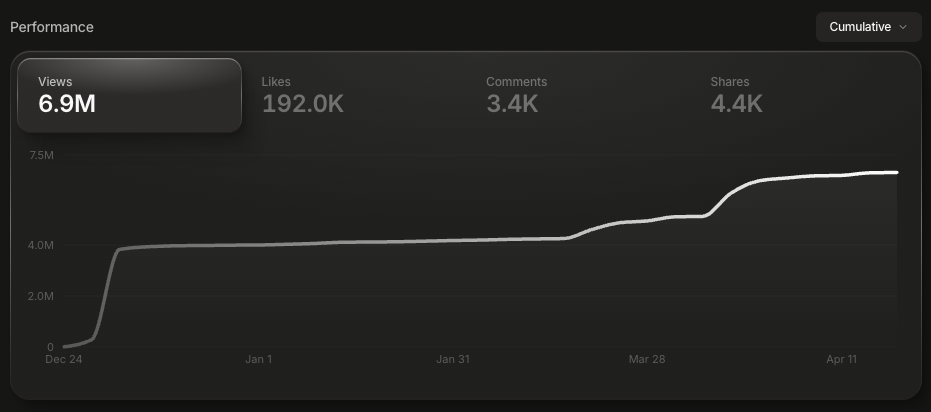
Performance clipping is a variable cost for outcomes. The budget funds views that the clips actually generate and that pass validation. Underdeliver and the budget is not spent. Overdeliver and you pay for the extra reach you received.
This market runs on real money
So the sane comparison is not subscription versus retainer. It is cost per result. A cheap subscription that produces clips nobody watches has a terrible cost per result. A larger performance budget that reliably produces reach can be far more efficient per view, even though the invoice is bigger. Judge what you got, not what you paid.
When the Tool Wins
An agency that pretends software never wins is selling, not advising. Buy the tool when:
- Your audience is already there. If your channels reach the people you need, distribution is solved and production is the only gap.
- You are still testing the format. Cutting a handful of clips yourself is the cheapest way to learn what your content produces before committing a campaign budget.
- Every clip needs legal review. Heavily regulated content is simpler to run through a workflow you control end to end.
- Volume is small. One episode a month does not need a network. It needs an hour and an export button.
- The budget is genuinely tight. A subscription is the honest starting point when a performance budget is out of reach.
When the Agency Wins
- Reach has flattened while output held steady. The clearest signal there is. Consistent posting plus stalled growth means the constraint is distribution, not production.
- A back catalog is sitting idle. Years of recorded content is inventory. Mining it into sustained posting volume is an operations problem, not an editing one.
- The reach has a deadline. A launch, a premiere, a release week. Volume across many accounts inside a fixed window is not something one team manufactures on demand.
- Paid channels are closed to you. Some categories cannot buy conventional ads at all. Organic distribution through creator accounts is one of the few channels still open.
- You want someone accountable for results. That requires a supplier whose payment depends on them.
The Checklist Version
One question decides most cases: when a clip you made gets posted, does it reach anyone who does not already follow you?
- Answer is yes, and cutting clips is the slow part: buy the software.
- Answer is no, and you keep making more clips anyway: you have a distribution problem. Software will not fix it.
- Feeding your own channels and reaching new ones are both goals: run both. The in-house team uses the tool for owned accounts while a campaign runs in parallel for everyone else. The two never conflict, because production and distribution were always separate problems.
Frequently Asked Questions
What is the difference between a clipping agency and an AI clipping tool?
An AI clipping tool is software that cuts a long video into short clips and hands the files back to you. A clipping agency is a managed service that cuts the clips and also distributes them, posting across a network of creator accounts so the clips reach audiences beyond your own following. The tool solves production. The agency solves production and distribution.
Can an AI clipping tool replace a clipping agency?
Only if distribution is already solved for you. If you have a large existing audience and just need clips cut faster, a tool is often enough. If your problem is that nobody sees your content, a tool will not fix it, because the clips still land on the same accounts reaching the same people.
Do clipping agencies use AI tools themselves?
Many do, and there is nothing wrong with that. AI editing software is a normal part of a modern clipper's workflow. The distinction is not whether AI touches the clip, it is whether anyone is accountable for where the clip goes afterward and whether it performed.
Is a clipping agency more expensive than an AI clipping tool?
The pricing models are not comparable. A tool charges a flat subscription for software access regardless of results. A performance clipping agency charges against the views the clips actually generate. One is a fixed cost for capability, the other is a variable cost for outcomes, so the right comparison is cost per result rather than cost per month.
Can I use an AI clipping tool and an agency at the same time?
Yes, and it is a common setup. Brands often use software in-house for owned-channel posting, where they control the accounts, while running an agency campaign in parallel for reach beyond their own audience. The two solve different problems and do not conflict.
How do I know which one my business needs?
Ask what is actually broken. If you have footage and no time to cut it, that is a production problem and software fixes it. If you are already posting clips and they are not reaching anyone new, that is a distribution problem and more software will not solve it.

Get the Views You Deserve
Book a strategy call and we will look at what you are posting, where the reach caps out, and whether a clipping campaign is the right fix. If software would serve you better, we will say so.
Book a strategy call